TL;DR Not every blocked or damaged pipe on your property is automatically yours to pay for. In England, the public sewer network is maintained by the area's statutory sewerage company — Wessex Water covers sewerage across Bristol — while pipework that serves only your property, and drains you share with one or two neighbours, are usually the owner's or owners' responsibility. A nationwide transfer of private sewers in 2011 changed who's responsible for a huge number of older connecting pipes, which still catches Bristol homeowners out. If you're dealing with a blockage and aren't sure whose problem it is, describe it through our contact form and we'll help you work out where it sits before recommending any work.
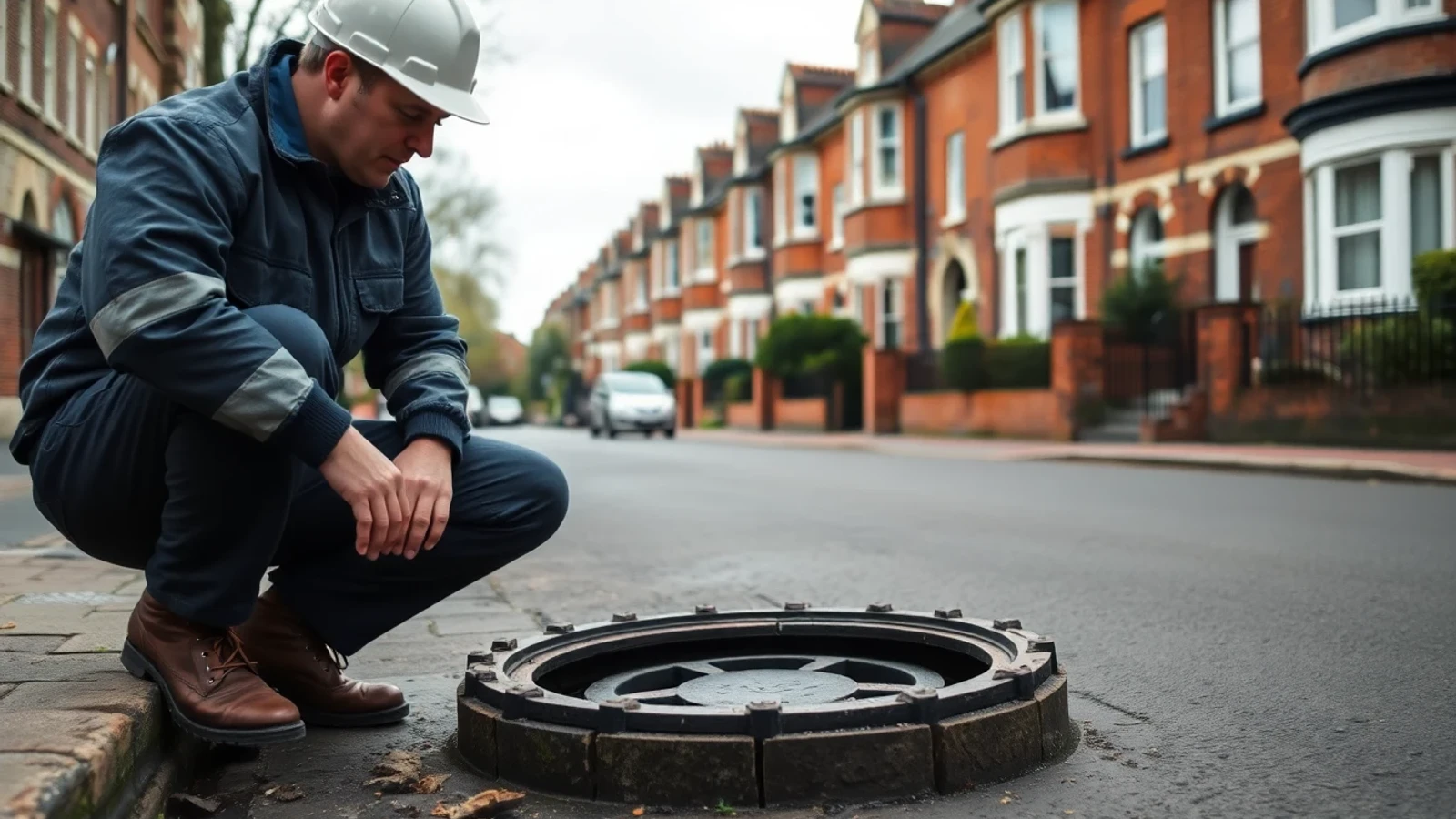
Public Sewer, Private Drain: The Basic Split A drain, in the strict sense, is the pipework that serves a single property, running from the building to the point where it meets a shared pipe or the public network. A sewer carries wastewater from more than one property. Public sewers — the large pipes running under roads and often through back gardens across Bristol — are owned and maintained by the statutory sewerage undertaker for the area, which is Wessex Water. Problems inside a public sewer, such as a collapse under the road or a blockage affecting several houses at once, are Wessex Water's responsibility to fix, not the individual homeowner's.
Pipework between your property and the point it joins that public network is generally your responsibility as the owner, unless it happens to be a lateral drain that was transferred to the water company (see below). Where a drain runs beneath your garden or under the house before it reaches the boundary, that section remains private even though it eventually carries wastewater away to a public sewer.
The 2011 Private Sewer Transfer and Why It Still Matters Until relatively recently, a huge number of older shared drains and lateral connecting pipes in England and Wales were privately owned, often jointly by several households whose properties happened to share a length of pipe. Tracking down who was responsible for a shared run could be a genuine headache, especially on streets built long before modern drainage records existed.
Under a nationwide transfer that took effect on 1 October 2011, most private sewers and lateral drains that connected to the public sewer network passed into the ownership of the local water and sewerage company. In practice, this means a great many pipes that Bristol homeowners might assume are still privately owned — particularly older shared drains serving a row of terraced houses — are now Wessex Water's to maintain. It's a change that isn't always reflected in what people believe about their own property, which is part of why it's worth checking rather than assuming.
Shared Drains in Bristol's Victorian and Georgian Terraces Bristol's housing stock includes long runs of Georgian and Victorian terraces, many built on the steep hillsides around Clifton and Redland long before anyone was thinking about individual drainage runs for each house. It was standard practice to lay one shared drain beneath a whole row of houses, with each property's waste joining it in turn before the combined flow eventually reached the public sewer. On a steep street, that shared run also has to cope with a sharper gradient and, in places, older jointing methods that have had well over a century to move, crack, or let tree roots in.
The result is that a blockage affecting one house in a Bristol terrace can sometimes originate from a neighbour's property further up the shared run, or from a section that transferred to Wessex Water in 2011 — not necessarily from anything on the affected homeowner's own land. Establishing which section is at fault before arranging repairs saves paying for work on a pipe that was never yours to fix.